 English
 Español
 Русский
Vision/Value: Pragmatism, Integrity, Passion

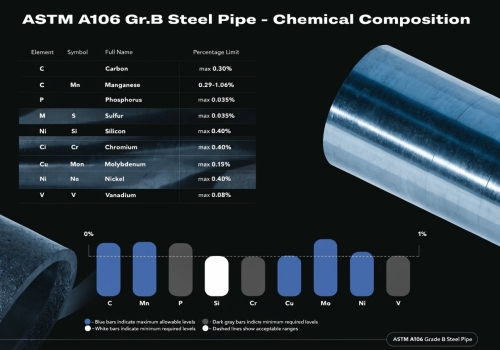
High-temperature pipe projects are hard. You might pick the wrong steel. Bad steel causes pipe failures. I will show you how to choose the right pipe material today. The astm a106 gr b pipe chemical composition contains a maximum of 0.30% Carbon. It has 0.29% to 1.06% Manganese. It limits Sulfur and Phosphorus to 0.035%. This specific makeup makes this seamless carbon steel pipe perfect for high-temperature projects.
I see many buyers struggle with pipe specifications. They buy the wrong materials often. The wrong materials waste money and time. You must learn the exact material details. You will avoid big mistakes by reading this guide.
Finding the right chemistry is hard. A small carbon mistake ruins your welding plan. Bad welds cause leaks. I will explain the exact element limits here. The astm a106 gr b pipe chemical composition follows strict limits. Carbon stays under 0.30%. Manganese ranges from 0.29% to 1.06%. Copper, Nickel, Chromium, and Molybdenum together must stay below 1.00%. These clear rules guarantee safe high-temperature pipe performance.
I want you to understand the exact element numbers. Steel mills follow these numbers closely. We test every steel batch in our factory. I use a simple table to show these limits. You can see the main elements below.
| Element | Percentage Limit (%) |
|---|---|
| Carbon (C) | Maximum 0.30 |
| Manganese (Mn) | 0.29 - 1.06 |
| Phosphorus (P) | Maximum 0.035 |
| Sulfur (S) | Maximum 0.035 |
| Silicon (Si) | Minimum 0.10 |
| Chromium (Cr) | Maximum 0.40 |
| Copper (Cu) | Maximum 0.40 |
| Molybdenum (Mo) | Maximum 0.15 |
| Nickel (Ni) | Maximum 0.40 |
| Vanadium (V) | Maximum 0.08 |
Chemical makeup means nothing without strength. Weak pipes burst under high pressure. Broken pipes stop your project. I will show you the exact strength numbers now. The mechanical strength works perfectly with the steel chemistry. ASTM A106 Grade B pipe has a minimum tensile strength of 415 MPa. It has a minimum yield strength of 240 MPa. This high strength ensures safe operation in demanding pipeline systems.
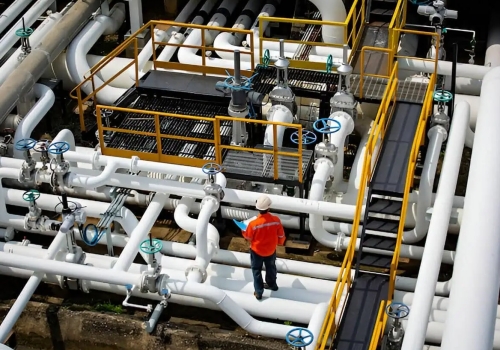
You need strong pipes for your oil and gas projects. The chemical elements create this strength. I test the pipe strength in our laboratory. We check the yield strength and tensile strength. I put the exact strength numbers in a table for you.
| Property | ASTM A106 Grade B Value |
|---|---|
| Tensile Strength | Minimum 415 MPa (60,000 psi) |
| Yield Strength | Minimum 240 MPa (35,000 psi) |
Buying good steel is smart. The wrong size wastes your time. Untested pipes bring big risks. I will list the exact sizes and tests below. ASTM A106 pipes range from 1/8 inch to 48 inches in diameter. The wall thickness follows the ASME B36.10M standard. Manufacturers must use flattening tests, hydrostatic tests, and nondestructive electric tests. These tests prove the pipe quality before shipping. You must order the correct pipe size. I help my clients find the right dimensions every day. The pipe outer diameter ranges from 10.3 mm to 1219 mm. The wall thickness varies a lot. I sell Schedule 10, Schedule 40, and Schedule 80 pipes. We also supply Schedule 160 pipes for very high pressure. I made a simple table to show our supply range.
| Specification | Supply Range |
|---|---|
| Outer Diameter | 1/8 inch to 48 inches (10.3mm to 1219mm) |
| Wall Thickness | SCH 10 to SCH 160 (1.24mm to 25.4mm) |
| Pipe Length | 5.8 meters to 13 meters |
| Pipe Ends | Plain, Beveled, Threaded |
You now know the astm a106 gr b pipe chemical composition details. You understand the strength and testing rules. I can help you supply reliable pipes for your projects.