 English
 Español
 Русский
Vision/Value: Pragmatism, Integrity, Passion

Heat exchanger failures cause unexpected downtime. You lose money and time. Do you struggle to find reliable tubes that bend perfectly without cracking? I know this frustration well. astm a179 heat exchanger tubes are seamless, cold-drawn, low-carbon steel tubes. They offer excellent heat transfer and reliable forming performance. These tubes are essential for heat exchangers and condensers in refineries, chemical plants, and power stations, ensuring safe and long-lasting operations.
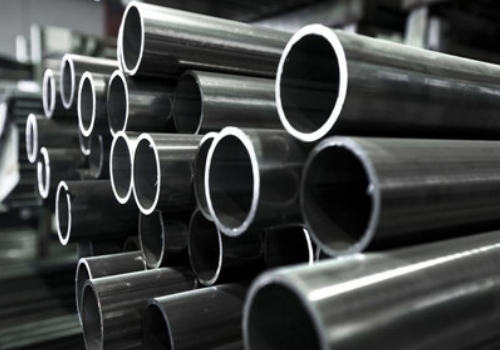
When I buy materials for construction projects, I look closely at the small details. Bad materials cause big problems later. So, I want to explore the core requirements with you today.
Weak materials fail under high pressure. You worry about poor workability during U-bending. The right chemical makeup solves this completely. The chemical composition of astm a179 heat exchanger tubes features low carbon content. This makeup ensures great cold workability for tube-to-tubesheet expansion. It also restricts phosphorus and sulfur to prevent brittleness and keep the internal surface clean.
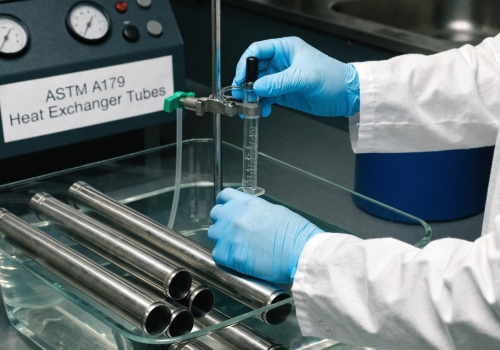
I have worked in the construction and pipeline industry for 18 years. I remember a project where we used tubes with high carbon content. The tubes cracked during the expansion process. It was a disaster for my team. We lost two weeks of work. Since then, I always check the chemical composition first. The low-carbon chemistry in these tubes is not an accident. It is a strict design choice. Carbon gives the tube its basic shape. But too much carbon makes the steel very hard. Manganese adds strength. It also helps remove oxygen during steel making. Phosphorus and sulfur are impurities. We must keep them very low. If sulfur is too high, the steel becomes brittle. It also becomes very hard to weld. Here is a simple table to show the exact requirements:
| Element | Requirement (wt%) | Engineering Significance |
|---|---|---|
| Carbon (C) | 0.06 - 0.18 | Maintains ductility for forming |
| Manganese (Mn) | 0.27 - 0.63 | Adds strength and deoxidation |
| Phosphorus (P) | ≤ 0.035 | Limits brittleness |
| Sulfur (S) | ≤ 0.035 | Keeps internal surface clean |
You control these elements. Then, the tubes become easy to bend. You can install them safely in complex exchanger bundles.
Soft tubes deform easily. Hard tubes crack under stress. Balancing strength and flexibility is very hard. Correct mechanical properties keep your heat exchanger safe. These tubes must meet strict mechanical requirements. The tensile strength must be at least 325 MPa. They need a minimum elongation of 35% and a maximum hardness of 72 HRB to prevent cracking during U-bending.
In my early years doing CAD designs for cooling trains, I learned a hard lesson. We ordered tubes that were too hard. When the production team tried to bend them into U-shapes, many tubes snapped. We had to order new ones. We missed our deadline. Mechanical properties are critical for safe fabrication. Yield strength tells us how much stress the tube can take before it bends permanently. Tensile strength is the absolute limit before it breaks. Elongation is also very important. A high elongation percentage means the tube can stretch safely during expansion. Let us look at the standard limits:
| Property | Minimum Requirement | Role in Heat Exchangers |
|---|---|---|
| Tensile Strength | ≥ 325 MPa | Provides structural safety margin |
| Yield Strength | ≥ 180 MPa | Controls deformation during forming |
| Elongation | ≥ 35% | Critical for safe expansion |
| Hardness | ≤ 72 HRB | Prevents cracking during U-bending |
At Centerway Steel, we check these numbers closely. We know that these properties allow safe fabrication and stable service.
Poorly made tubes scale up and block flow. This reduces thermal efficiency quickly. A strict production and testing process stops this from happening. The manufacturing uses seamless production and multi-pass cold drawing. Next, tubes are heat-treated above 650°C. This relieves stress and restores ductility. Finally, strict tests verify leak-tightness and structural soundness.
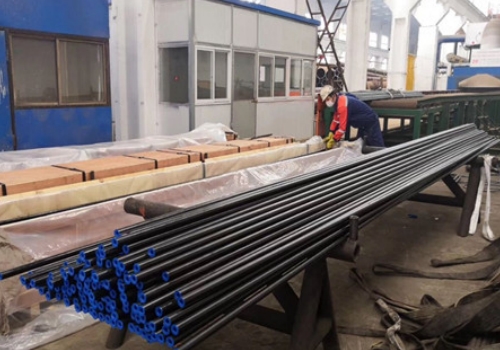
The way a factory makes a tube changes its whole life cycle. I always visit production lines to see this firsthand. The process starts with a solid metal billet. The factory pierces the billet to make it hollow. Then, it goes through hot forming. After that, the multi-pass cold drawing begins. Cold drawing is vital. It improves the surface finish. It keeps the inside very clean. A clean inside reduces fouling when the heat exchanger runs. But cold drawing creates stress inside the metal. So, we must heat the tubes to at least 650°C. This final heat treatment relieves the stress. It also brings back the ductility needed for U-bending. We must also test the tubes before shipping.
| Inspection Item | Purpose |
|---|---|
| Hydrostatic or NDE test | Verifies leak-tightness |
| Flattening test | Checks soundness and ductility |
| Flaring test | Validates tubesheet expansion capability |
| Hardness test | Confirms cold-work levels |
These tests ensure every tube from Centerway Steel is safe and ready for work.
Buying the wrong size ruins a project timeline. Finding a trusted supplier is very stressful. Clear procurement guidelines fix this issue. When you specify astm a179 heat exchanger tubes, always define the outer diameter, minimum wall thickness, and length. Ensure they are scale-free. You can use these tubes in shell and tube heat exchangers and power plant condensers safely.
I spend a lot of time helping engineers find the right specs. You need to be exact when you order. Always state the Outside Diameter (OD). The standard size ranges from 3.2 mm to 76.2 mm. You also need to specify the minimum wall thickness and the total length. Make sure you ask for scale-free tubes with protected ends. You also want a Material Test Certificate with full traceability. We pack our tubes with marine-grade export protection. This stops corrosion and physical damage during shipping. You will see these tubes in many places. They work in refinery cooling trains, industrial chillers, and process heat rejection systems. If you deal with seawater, you might need extra coatings or different alloys like ASTM A213.
Q: What is ASTM A179 tubing used for?
A: It is used for heat exchangers, condensers, and similar heat-transfer equipment.
Q: Is ASME SA179 equivalent to ASTM A179?
A: Yes, SA179 is the ASME version of ASTM A179. Always confirm the exact code your project needs.
Q: What size range does ASTM A179 cover?
A: It typically covers 1/8 inch to 3 inches in outside diameter.
Q: What tests are commonly required?
A: Common tests include hardness, flattening, flaring, and hydrostatic or NDE testing.
ASTM A179 seamless tubes provide excellent heat-transfer efficiency and reliable forming capability. They ensure safe operations in cooling units. Choose Centerway Steel for your trusted pipeline product needs today.