 English
 Español
 Русский
Vision/Value: Pragmatism, Integrity, Passion

Finding the exact specifications for pipeline projects can be a headache, especially when you are balancing quality requirements with strict budget controls. You might worry about choosing the wrong grade or facing delays due to supply chain issues, which can put your entire engineering project at risk. I want to help you understand the specific standards to ensure your procurement process is smooth and error-free. ASTM A312 seamless stainless steel pipe is a standard specification for seamless, welded, and heavily cold worked austenitic stainless steel pipes intended for high-temperature and general corrosive service. It covers a wide range of diameters from 1/8" to 30" and is critical for industries like petrochemicals and food processing where durability is non-negotiable.
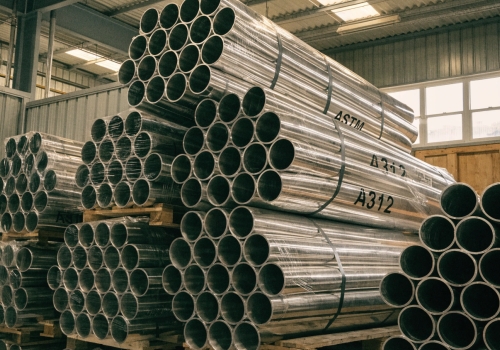
Now that you know the basic definition, we need to look closer at the details. Many buyers make mistakes not in the general selection, but in the specific manufacturing types and testing requirements.
If you do not understand the full scope of this standard, you might end up with a product that fails under high pressure or high temperature. You need a clear understanding of the manufacturing types to match the pipe to your specific engineering application. The ASTM A312 standard covers austenitic stainless steel pipe utilized in high-temperature settings and general corrosive environments. It specifically outlines requirements for three manufacturing types: seamless (SMLS), welded (WLD), and heavily cold worked (HCW), ensuring that each pipe meets strict chemical and mechanical benchmarks before installation.
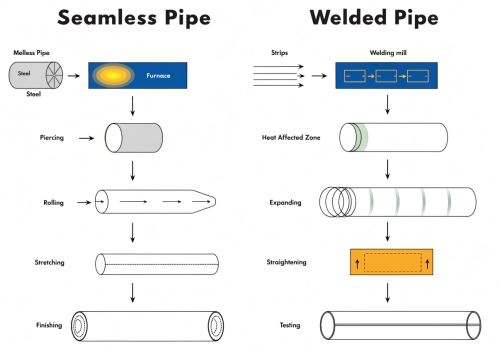
When we talk about the astm a312 seamless stainless steel pipe, we are looking at a very specific production method. This standard is not just about dimensions; it is about how the steel behaves under stress. As a supplier since 1996, I have seen many requests for this standard. The scope covers sizes from NPS 1/8 to NPS 30. For wall thicknesses, it ranges from Schedule 5S to Schedule 80S. You need to know the three main manufacturing types allowed in this standard. First is the Seamless Pipe (SMLS). We make this in a process that involves no welding at any stage. This is crucial for applications requiring high pressure tolerance. Second is Welded Pipe (WLD). This involves an automatic welding process where we do not add filler metal. Third is the Cold Worked Pipe (HCW). This is a heavy cold-worked pipe. We reduce the thickness of the wall by at least 35% and anneal it. For the astm a312 seamless stainless steel pipe, the surface finish is also key. The standard says the pipe must be free of oxide scale. If we bright anneal the pipe, pickling might not be necessary. But for most industrial uses, you might ask us for passivating treatment to ensure the pipe remains clean and durable. We handle these requests daily at Centerway Steel to ensure the product fits your exact project needs. The manufacturing process creates the structure, but the chemical composition determines the life of the pipe. If you choose the wrong grade, corrosion will happen much faster than you expect.
Choosing between 304 and 316 grades is one of the most common dilemmas for purchasing managers, and making the wrong choice can lead to rapid corrosion or unnecessary costs. You need to compare the chemical elements like Molybdenum to see which grade fits your specific environment. TP304 is the most versatile general-use stainless steel, ideal for food processing and standard environments, while TP316 contains Molybdenum, which provides superior resistance to pitting and crevice corrosion in chloride-rich or marine environments. Your choice depends entirely on the level of corrosive elements the pipe will face.
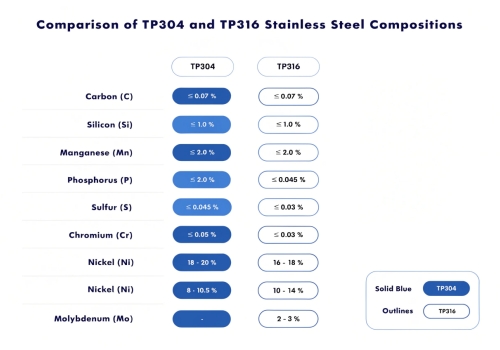
Let's dig deep into the material science here. The most common grades for astm a312 seamless stainless steel pipe are TP304/304L and TP316/316L. The "L" stands for Low Carbon, which is better for welding. TP304 is basically an 18/8 stainless steel. This means it has roughly 18% Chromium and 8% Nickel. It is fantastic for general use. It resists oxidation and is easy to clean. You will see this often in food processing, urban pipeline networks, and building construction. However, TP316 is the premium option. The main difference is Molybdenum. We add Molybdenum to TP316 to help it fight against chlorides. If your project is near the ocean or involves salty water, TP304 might rust, but TP316 will not. TP316 also performs better at sub-zero temperatures. Here is a simplified table of the chemical composition requirements for these grades based on the standard:
| Grade | C (max) | Mn (max) | P (max) | S (max) | Si (max) | Cr | Ni | Mo |
|---|---|---|---|---|---|---|---|---|
| TP304 | 0.08 | 2.0 | 0.045 | 0.030 | 1.00 | 18.0–20.0 | 8.0–11.0 | - |
| TP304L | 0.035 | 2.0 | 0.045 | 0.030 | 1.00 | 18.0–20.0 | 8.0–13.0 | - |
| TP316 | 0.08 | 2.0 | 0.045 | 0.030 | 1.00 | 16.0–18.0 | 11.0–14.0 | 2.0–3.0 |
| TP316L | 0.035 | 2.0 | 0.045 | 0.030 | 1.00 | 16.0–18.0 | 10.0–14.0 | 2.0–3.0 |
Chemistry is important, but if the pipe is not treated correctly after forming, it will be weak. You cannot skip the testing phase.
Even with the right chemical mix, a pipe that has not been properly heat-treated will retain internal stresses that can cause it to crack during operation. You must verify that your supplier performs rigorous heat treatment and mechanical testing to guarantee the structural integrity of every single pipe. Heat treatment, specifically solution annealing and quenching, dissolves internal carbides to prevent corrosion and restores the metal's ductility after forming. Mechanical tests like the tension test and flattening test are mandatory to prove the pipe can withstand the pressures and physical deformations required by your project specs.
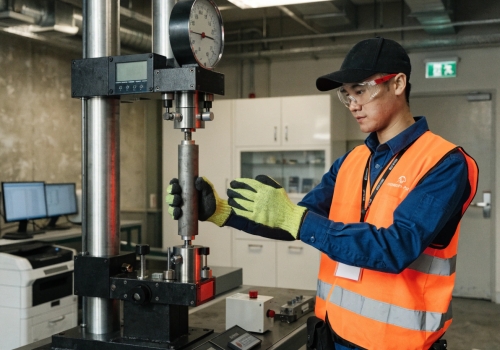
At Centerway Steel, we take heat treatment very seriously. For ASTM A312 pipes, we must furnish them in a heat-treated condition. For seamless types, we usually do this immediately after hot forming. We make sure the temperature is not less than the minimum solution treatment temperature. Then, we quench the pipes in water or cool them rapidly. Why do we do this? It is to prevent the reprecipitation of carbides. If carbides form, the stainless steel loses its corrosion resistance. After heat treatment, we move to mechanical testing. You should look for two main tests in your reports: the Transverse or Longitudinal Tension Test and the Flattening Test. For the tension test, if the lot is small (under 100 pipes), we take one specimen. If it is larger, we take two. This measures the yield strength and tensile strength. For example, TP304 usually needs a minimum tensile strength of 75 ksi (515 MPa) and a yield strength of 30 ksi (205 MPa). The flattening test is also vital. We take a section of the pipe and flatten it between parallel plates. This checks for ductility and ensures there are no cracks in the metal. If the pipe is welded, this test also checks the strength of the weld. We usually test 5% of the pipes from each heat-treated lot. These strict quality controls are why we have obtained ISO 9001 and approvals from major bodies like SGS and TUV.
To select the right astm a312 seamless stainless steel pipe, you must understand the manufacturing method, choose between TP304 and TP316 based on corrosion risks, and insist on proper heat treatment verification.