 English
 Español
 Русский
Vision/Value: Pragmatism, Integrity, Passion

Do you worry about weak pipes breaking under pressure? Bad pipes cause leaks and cost you money. I will show you how we make strong seamless steel pipes. You might ask, how are seamless tubes produced? We make seamless tubes by heating a solid steel block. We pierce a hole through its center. Then, we roll and stretch it to the final size. This creates a very strong pipe with no weak welded seams.
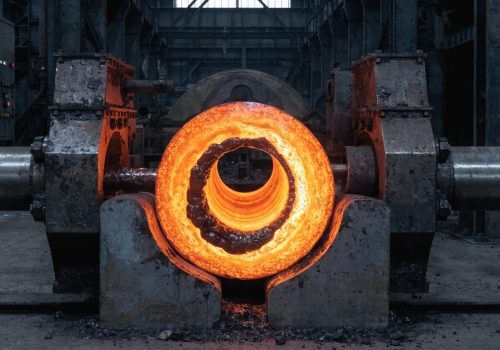
Knowing these steps helps you pick the right materials. This knowledge can save your EPC company a lot of money. But if you choose the wrong type of pipe, your whole pipeline could fail. Let me show you the real methods we use in our factories every day.
Do you need high-quality pipes under 6 inches? Small pipes can easily fail if a factory makes them poorly. The mandrel mill process solves this problem perfectly. We use the mandrel mill process for pipes between 1 and 6 inches. We pierce a hot steel billet first. Then we push a mandrel bar inside it. Rollers press the outside to reduce the wall thickness. This gives the tube an exact size.
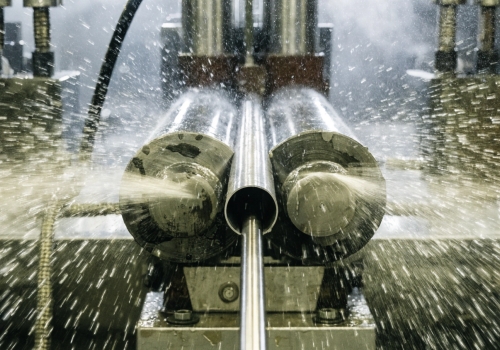
I have worked in the steel pipe industry for many years. Buyers often ask me how we make small pipes so strong. The mandrel mill process is our best answer. We start with a solid round steel billet. We heat it in a special rotary furnace. Then we use a piercer machine to make a hole right in the middle. The steel becomes a hollow shell. Next, we put a long mandrel bar into the shell. The mandrel mill has curved rollers. These rollers sit at 90-degree angles to each other. They squeeze the hot tube against the inner mandrel bar. This step reduces the wall thickness safely and continuously. After that, we reheat the mother tube. We put it through a stretch-reducing mill. This machine makes the outside diameter smaller. Finally, we cool the tube, cut it, and make it straight.
| Step | Machine Used | Purpose for Your Pipe |
|---|---|---|
| 1 | Heating Furnace | Make the raw steel soft |
| 2 | Piercer | Create the hollow center |
| 3 | Mandrel Mill | Reduce the wall thickness |
| 4 | Stretch Reducer | Reduce the outside diameter |
This process is great for saving costs. It gives you very accurate pipe dimensions for your exact construction needs.
Do your large projects need huge pipes? Big pipes carry more risk if they have weak points. The plug mill process is the safest way to make them. You might wonder again, how are seamless tubes produced for larger sizes? We use the plug mill process for pipes between 6 and 16 inches. We pierce a heavy steel block. Then we use an internal plug and large rollers to shape thick walls perfectly.
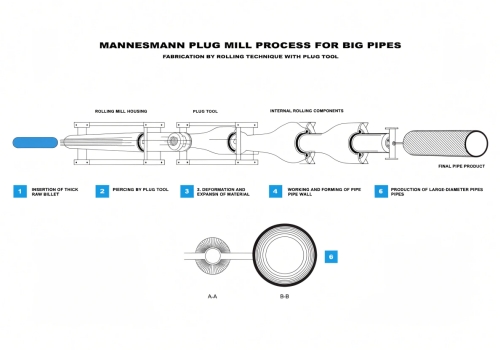
Large construction projects need very strong materials. I remember an EPC client who needed big pipes for a city water network. They wanted absolutely no welded seams. So, we used the Mannesmann plug mill process. This method handles large steel blocks that weigh up to two tons. First, we heat the massive steel block to 2,370°F (1,300°C). We pierce it to make a hollow shell. Then we use a rotary elongator. This machine makes the inside hole much bigger. It creates a short, thick tube. We call this a bloom. Next, we force a hard plug into the bloom. The plug is almost the exact same size as the final inside diameter. We pass the bloom through the plug mill rollers. We turn the tube 90 degrees after every single pass. This turning keeps the pipe perfectly round.
| Process Step | Action Taken | Result for the Pipe |
|---|---|---|
| Piercing | Push a hole in hot steel | Creates a basic hollow shell |
| Elongating | Make the hole wider | Creates a thick bloom |
| Plug Mill | Roll over a plug | Reduces the wall thickness |
| Reeling Mill | Smooth the inside walls | Makes the thickness even |
Are you trying to choose between seamless and welded pipes? A wrong choice can break your budget. Seamless pipes offer the best safety for hard jobs. Seamless pipes do not have weld lines. A weld line is always the weakest part of a pipe. Seamless pipes handle high pressure and heat much better. They are the top choice for oil, gas, and major building construction projects worldwide.
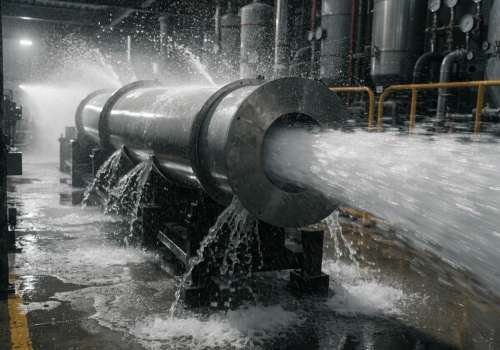
Many purchasing managers from large EPC companies visit our factory. They often ask me exactly how are seamless tubes produced to handle such extreme conditions. The answer is in the solid steel start. Because we do not weld two pieces of metal together, the pipe structure is whole and pure. When you build a power plant or a deep oil well, pressure is a big problem. A welded pipe might split at the seam under high stress. A seamless pipe stays strong. Over the years, we have supplied these solid pipes to big companies like Aramco, Shell, and CNOOC. They trust this exact manufacturing method. To make sure our pipes are perfect, we test them strictly. We fill every single pipe with water and apply extreme pressure. We call this a hydrostatic test. We also use smart machines to check for hidden cracks.
| Pipe Feature | Benefit for Your Construction Project |
|---|---|
| No Welded Seam | Higher pressure capacity and safety |
| Solid Steel Body | Better heat and cold resistance |
| Exact Dimensions | Easy to install and fit together |
Knowing how seamless tubes are made helps you buy better materials. These strong pipes will keep your construction projects safe, save you money, and prevent dangerous pipeline failures.