 English
 Español
 Русский
Vision/Value: Pragmatism, Integrity, Passion

Pipeline failures stop your project dead. The costs pile up fast, and the pressure from stakeholders grows every hour. You need a fix that is fast and reliable. Large diameter pipe repair involves assessing damage severity to choose between trenchless methods (like CIPP) or partial replacement. The right choice minimizes downtime and restores structural integrity. This guide compares methods to help you save costs on your next infrastructure project.
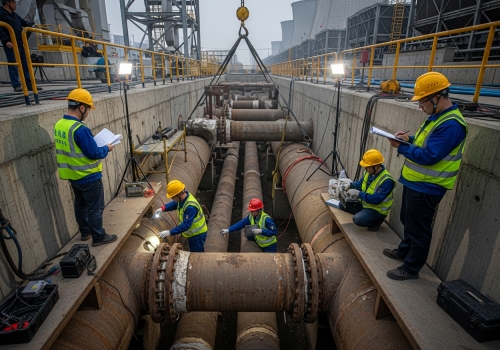
I have seen many managers struggle with this choice. It is not easy to decide between patching a leak and digging up the ground. The wrong choice can ruin a budget. Let us look at the details.
You think the installation was perfect, but suddenly pressure drops. Finding the root cause is stressful when thousands of dollars are at risk. You must act quickly to save the system. Understanding failure points like corrosion, joint separation, or ground shifting is the first step. Identifying the specific type of damage determines if you need a simple patch or extensive large diameter pipe repair.
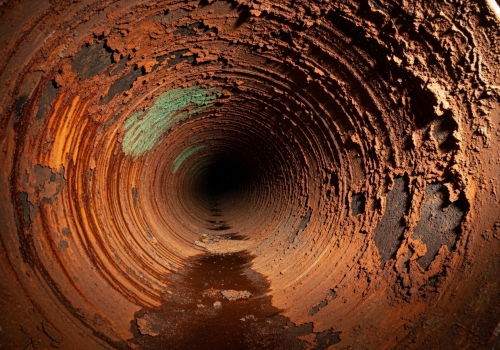
I have been in the steel pipe industry since 1996. I have seen many pipes fail because people did not understand the environment. To choose the right large diameter pipe repair, you must look at the cause. It is usually not just bad luck. First, look at corrosion. In the oil and gas industry, internal corrosion eats the pipe wall. This reduces the thickness. If the wall is too thin, the pipe cannot hold pressure. Second, look at the joints. The ground moves over time. This movement pulls the joints apart. This causes leaks in water mains and sewage lines. Third, look at physical damage. Heavy construction nearby can crush a pipe. You need to analyze the damage level before you pick a tool. A small crack is different from a collapsed section. I always tell my clients to use a decision matrix. This helps them see the problem clearly.
| Damage Type | Common Cause | Recommended Assessment Tool |
|---|---|---|
| Internal Pitting | Chemical reaction / Flow friction | Ultrasonic Thickness Gauge |
| Joint Leakage | Ground settling / Vibration | CCTV Robot Camera |
| Structural Crack | Heavy load / Impact | Laser Profiling |
| Shape Deformation | Soil pressure | Mandrel Test |
Digging up roads causes public anger and massive delays. You worry about the schedule, but you also worry if a liner is strong enough to last for a long time. Trenchless large diameter pipe repair, such as Cured-In-Place Pipe (CIPP), creates a new pipe inside the old one. It saves time and preserves the landscape, making it ideal for urban areas or under busy facilities.
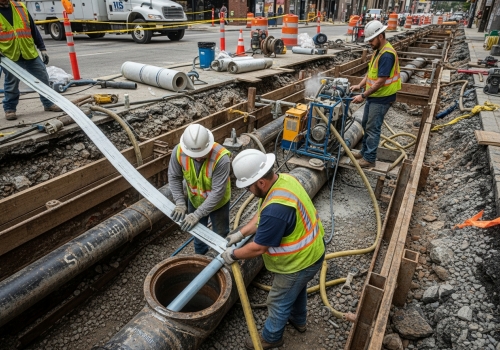
Many of our partners in Europe ask me about trenchless methods. They like it because it is clean. It does not destroy the road above. The most popular method is Cured-In-Place Pipe (CIPP). Here is how it works. First, you clean the old pipe. You must remove all the dirt and rust. If you leave dirt, the new liner will not stick. Next, you pull a flexible tube into the pipe. This tube is full of resin. Then, you use hot water, steam, or UV light to cure it. The resin gets hard. Now you have a "pipe within a pipe." This is great for storm drains and sewers. It creates a smooth surface. This improves the flow of water. It stops leaks from the outside ground. But you must be careful. This method does not fix a crushed pipe. The old pipe must still have its round shape. If the pipe is flat, the liner will be flat too.
| Feature | Trenchless Repair (CIPP) | Traditional Excavation |
|---|---|---|
| Site Impact | Low (Access points only) | High (Full trench needed) |
| Speed | Fast (Days) | Slow (Weeks) |
| Cost | Lower for deep pipes | Higher for deep pipes |
| Structural Aid | Relies on host pipe shape | Fully independent structure |
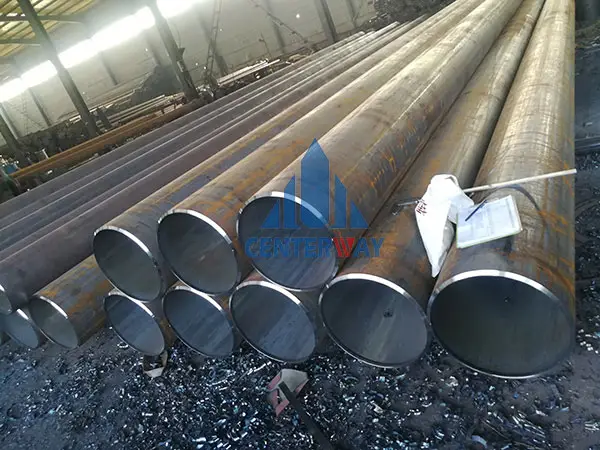
Sometimes a patch is just a temporary bandage on a deep wound. You fear that fixing it cheap now will cost you your reputation later when the pipe fails again. If the structural integrity is compromised, lining is not enough. You must excavate and perform a large diameter pipe repair by replacing the damaged section with new steel pipe. This ensures safety and longevity.
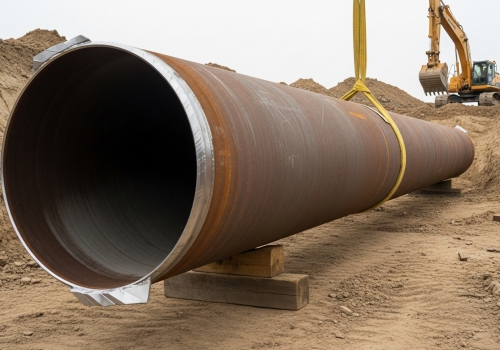
I remember a project with an EPC company in Germany. They had a 120-inch water line. It was under a factory. They wanted to line it. But I looked at the data. The pipe was oval-shaped. The ground pressure was too high. A liner would fail in two years. I told them the truth. They needed to dig. They needed to cut out the bad section. They needed to weld in a new piece of high-strength steel pipe. Replacement is the only choice when the pipe wall is too thin. It is the only choice when you need higher pressure. Lining reduces the inside diameter. This might reduce the flow volume too much. New steel pipe gives you full strength. It gives you full capacity. At Centerway Steel, we see this often in high-pressure oil lines. You cannot gamble with safety there.
| Condition | Lining (Repair) | Replacement (New Pipe) |
|---|---|---|
| Pipe Shape | Must be round | Can replace collapsed sections |
| Pressure Rating | Limited by liner strength | Full design pressure |
| Diameter | Reduces slightly | Maintains original size |
| Life Expectancy | 50 Years | 50-100 Years |
Effective repair requires analyzing the damage and choosing between trenchless lining or replacing sections with our durable Large-Diameter Steel Pipe to ensure long-term safety and performance.