 English
 Español
 Русский
Vision/Value: Pragmatism, Integrity, Passion

Are you struggling to find safe pipes for high-pressure systems? Choosing the wrong pipe can cause bad leaks or big explosions. I will show you how to pick the right one. The schedule 40 seamless pipe pressure rating depends on its size, material, and temperature. For example, a 2-inch schedule 40 steel pipe holds about 3,177 psi at room temperature. This rating helps engineers safely design water, gas, and oil pipelines to prevent system failures.
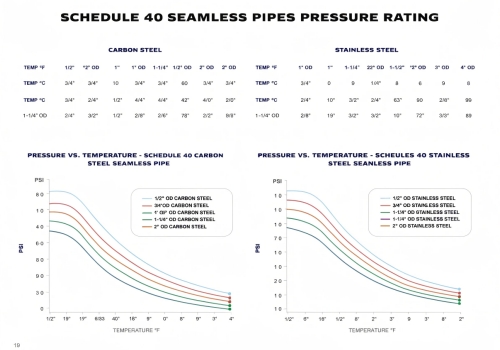
You might think all schedule 40 pipes hold the exact same pressure. But that is a big mistake. Read on to find out why pipe sizes and materials change everything.
Do you buy pipes based only on the name? This habit wastes money. You must know the exact sizes to meet project safety rules. Let me explain the details. Pipe dimensions directly control the pressure rating. ASME B36.10 sets the rules for carbon steel pipes. As the pipe diameter gets bigger, the pressure it can safely hold goes down. Wall thickness and outside diameter are the two main numbers you need to check first.
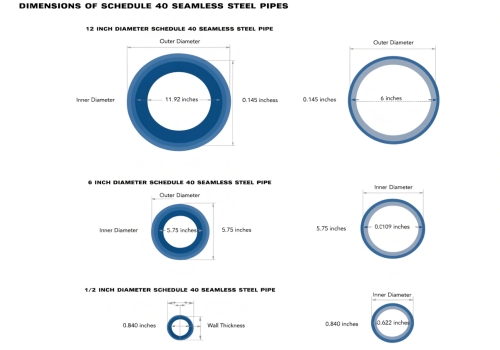
I have worked in the EPC construction industry for 18 years. I remember a big water supply project we did in Kenya, Africa. The client needed a strong schedule 40 seamless pipe pressure rating to move water across a long distance. Finding a one-stop supplier for this was very hard. Finally, my company chose Centerway Steel. Their team showed me how pipe size changes the pressure limit.
Bigger pipes hold less pressure. If you look at a 1-inch pipe, it safely holds about 4,956 psi. But a big 10-inch pipe only holds 1,664 psi. You must remember this rule when you buy pipes.
We used standard ASME rules to check the pipes for our African project. Here is a simple table to show the big difference in pressure ratings.
| Pipe Size (NPS) | Outside Diameter (inch) | Max Pressure (psi) |
|---|---|---|
| 1/2 inch | 0.84 | 6,358 |
| 2 inch | 2.375 | 3,177 |
| 6 inch | 6.625 | 2,071 |
| 12 inch | 12.75 | 1,560 |
Math formulas for pipes look very hard to learn. A wrong guess can ruin your entire pipeline project. But you do not need to worry. I will make the calculation easy for you. Engineers use Barlow's formula to find the schedule 40 seamless pipe pressure rating. The formula is P = (2 x S x t) / D. "P" is the pressure, "S" is the material stress, "t" is wall thickness, and "D" is the outside diameter.
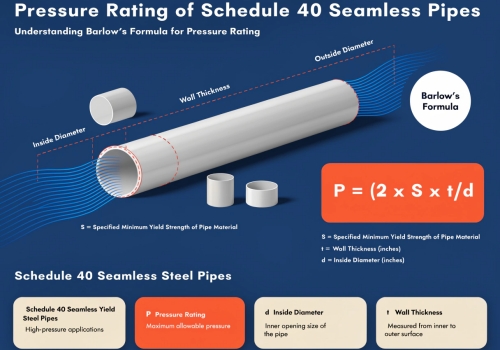
Many buyers just look at simple charts. I prefer to understand the math behind the numbers. In my 18 years of work, I learned that a good formula saves you from bad choices. Barlow's formula is the best tool we have in the construction industry.
You must know four things to use this formula well.
P stands for the maximum pressure in psi. This is the final number we want to find.
S stands for allowable stress. This number changes based on the exact steel grade you buy.
t stands for wall thickness. Schedule 40 has different thicknesses for different pipe sizes.
D stands for the outside diameter of the pipe.
When I worked on a gas pipeline in Nigeria, Africa, the heat was very high. The "S" value in our formula changed because of the high temperature. Centerway Steel helped my team recalculate the pressure limits. They gave us real test reports from SGS and TUV to prove their pipes were safe. We used Barlow's formula to double-check their numbers. Every detail matched perfectly. This gave our engineering team full confidence to build the pipeline.
Do your pipes fail even when the math is totally right? Real-world conditions destroy pipes fast. You must look at the working environment. I will share the top risk factors. Three main things change the schedule 40 seamless pipe pressure rating. The pipe material decides the base strength. The working temperature lowers the pressure limit when it gets too hot. Finally, the pipe diameter lowers the safe pressure as the pipe gets wider.
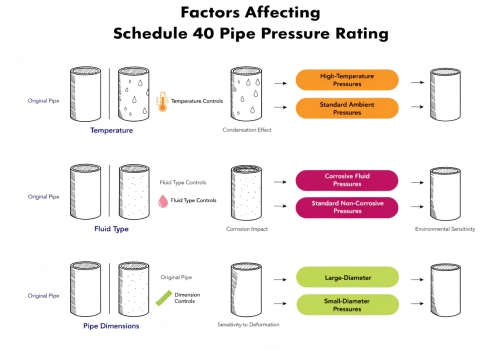
A single number on a paper is never enough. My job as a purchasing manager is to buy pipes that work in the real world. Over the years, I learned that the schedule 40 seamless pipe pressure rating changes a lot under stress.
Carbon steel and stainless steel act very differently. Carbon steel is very strong for general use and saves money. Stainless steel costs more but handles acid and rust much better. You must pick the right material for your fluid.
Heat makes metal weak. If the weather is hot or the fluid is hot, the pressure rating drops fast. Our oil projects in North Africa face this hot problem every day. We must lower the allowed pressure to keep the system safe from breaking.
As I said before, wider pipes hold less pressure. Let us look at a simple comparison of these factors.
| Factor | Impact on Pressure Rating | How to Fix It |
|---|---|---|
| Material | Weak materials hold less pressure | Buy high-grade steel from a good supplier |
| Heat | High heat lowers safe pressure limits | Reduce the working pressure in hot places |
| Size | Bigger diameter means less pressure | Check the pressure chart before buying |
The schedule 40 seamless pipe pressure rating depends on size, heat, and material. Using the right formula and a reliable supplier keeps your global pipeline projects completely safe and successful.