 English
 Español
 Русский
Vision/Value: Pragmatism, Integrity, Passion

You face tight budgets and harsh operating conditions in your latest pipeline project. Finding materials that balance durability with cost is a constant headache for purchasing managers. Alloy steel welded pipes offer the perfect middle ground between high performance and budget control. They provide excellent resistance to heat and corrosion while allowing for larger diameters and consistent wall thickness at a lower price point than seamless options.
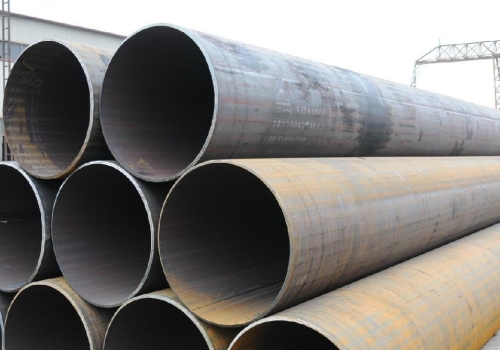
Let's move away from the basic definitions and look at why these pipes are the smart choice for your inventory.
Confusion about material specs often leads to ordering the wrong items for your site. You cannot afford mistakes when high pressure and extreme heat are involved in your systems. These pipes combine carbon steel with elements like chromium and molybdenum, joined by precision welding. They deliver the mechanical strength needed for power plants and refineries without the excessive cost of seamless manufacturing.
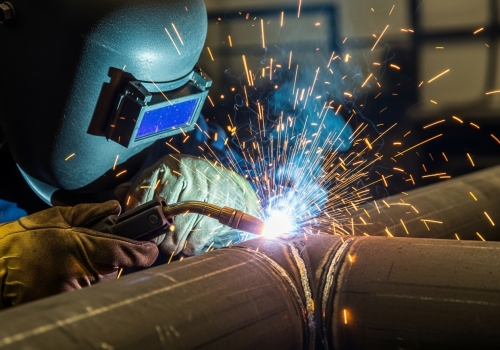
When we talk about alloy steel, we are talking about a "recipe." Just like a chef adds spices to a dish to change its flavor, we add specific elements to carbon steel to change its behavior. In my years at Centerway Steel, I have seen how adding just a small amount of chromium can save a pipeline from rusting away in a few years. The base material starts as a steel plate. We roll this plate and weld the seam. This is different from seamless pipes, which are pulled from a solid billet. For alloy steel welded pipes, the welding process is usually Electric Fusion Welding (EFW). This is crucial because alloy materials are sensitive. We have to control the heat carefully. Here is a simple breakdown of the elements we add and why they matter for your project:
| Element | Symbol | Main Benefit for the Pipe | Typical Application |
|---|---|---|---|
| Chromium | Cr | Resists rust and oxidation | Chemical plants, wet environments |
| Molybdenum | Mo | Increases strength at high heat | Power plant boilers, steam lines |
| Nickel | Ni | Improves toughness at low temps | Cryogenic gas transport |
| Vanadium | V | Refines the grain structure | Structural components |
We use this method because it allows us to create pipes with very specific properties. If you need a pipe that can handle 500 degrees Celsius, we use a Chrome-Moly blend. If you need it to resist acid, we adjust the recipe. This flexibility is why these pipes are the backbone of modern industry.
You are under pressure to cut project costs without sacrificing safety or quality. Seamless pipes are great, but their price tag can destroy your budget on large-diameter lines. Alloy steel welded pipes generally cost 20% to 30% less than seamless versions. They are readily available in large diameters where seamless manufacturing becomes impossible or prohibitively expensive, ensuring your project stays on schedule.
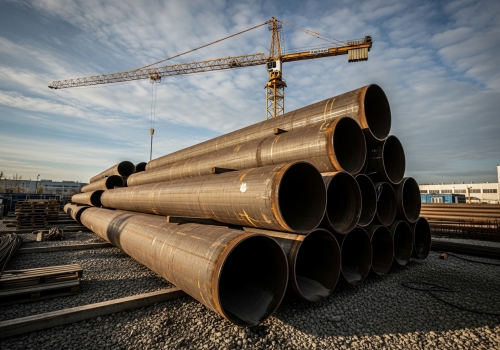
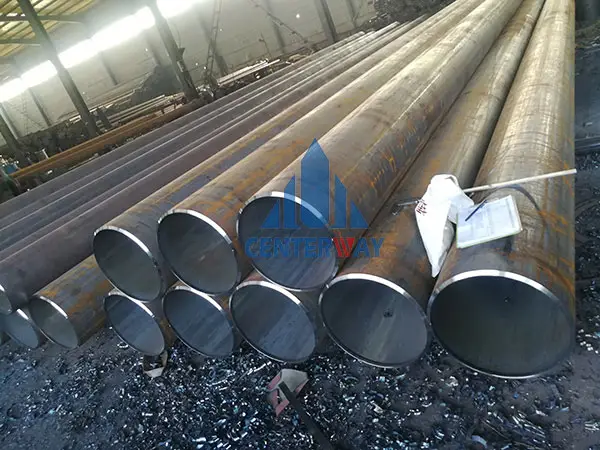
I often talk to purchasing managers who believe that "seamless is always better." This is a myth. While seamless pipes have no seam, they have limitations. The biggest limit is size. It is very hard and expensive to make a seamless pipe bigger than 24 inches. If your project involves a main transmission line that is 40 or 50 inches wide, you have to use welded pipes. But cost is not the only reason. Let's look at wall thickness. Because welded pipes are made from steel plates, the thickness of the wall is very consistent. The plate is rolled flat in a mill, so it is even all the way across. Seamless pipes can sometimes be a little off-center, making one side thicker than the other. When you buy alloy steel welded pipes, you also get faster delivery. Making a custom seamless die takes weeks. Rolling a plate and welding it is much faster. In the EPC world, time is money. If you are building a power plant, waiting three extra months for seamless pipes can cost millions. I always tell my clients: do not pay for "seamless" if "welded" does the job. Modern welding technology is so advanced that the weld is often stronger than the pipe itself. We check every inch of that seam. So, for large projects, the welded option gives you the best balance of price, speed, and quality.
Navigating the alphabet soup of ASTM standards and grades is exhausting for even experienced buyers. Picking the wrong grade can lead to catastrophic failure in high-temperature boilers. The most common specifications include ASTM A691 for high-pressure service. Grades like 1-1/4 CR (Class 11) and 2-1/4 CR (Class 22) are standard for handling high temperatures in power generation and petrochemical sectors.
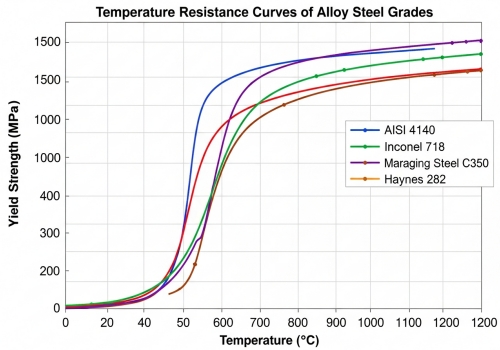
In the world of welded alloy pipes, ASTM A691 is the Bible. This is the standard specification for carbon and alloy steel pipe, electric-fusion-welded for high-pressure service at high temperatures. You will see this on your spec sheets often. Under this standard, we have different "classes" or grades. These match the chemical composition of the seamless "P" grades you might know (like P11 or P22), but for welded pipes, we usually refer to the plate grade. Here is how to match them up for your engineers:
· Grade 2¼ Cr (Similar to P22): This is the next step up. It handles higher heat and pressure. You find this in the main steam lines of power plants.
· Grade 91 (Similar to P91): This is the high-end stuff. It is very strong and handles extreme heat. However, welding this is tricky. It needs very careful heat treatment. When you send me an inquiry, it helps to know the "Class" as well. The Class tells us how much we need to test the weld. For example, Class 12 means we have done 100% radiography (X-ray) on the weld. Class 42 might mean we also did a pressure test. Knowing these grades helps you avoid over-specifying. You do not need Grade 91 for a low-temp water line. And you definitely do not want Grade 1¼ Cr for a superheater in a boiler. We can help you check these specs against your project needs to ensure safety.
The fear of a weld failure in a high-pressure line keeps engineers and safety officers awake at night. You need proof that the welded joint is as strong as the base metal. Rigorous Non-Destructive Testing (NDT) is the key. We utilize Radiographic Testing (RT) and Ultrasonic Testing (UT) combined with Post-Weld Heat Treatment (PWHT) to ensure the seam meets all mechanical property requirements. Quality control is where Centerway Steel really shines.
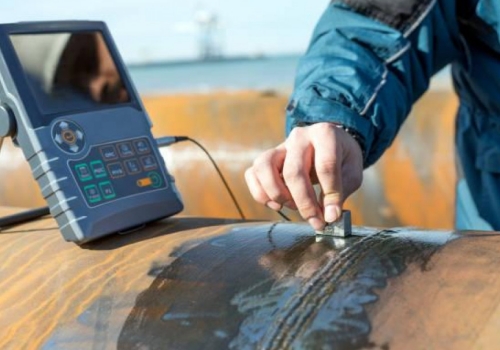
I know that the word "welded" makes some people nervous. They worry the pipe will burst at the seam. But in our factory, the seam is the most inspected part of the pipe. First, we use X-rays (Radiographic Testing). We take pictures of the inside of the weld. If there is even a tiny bubble of air or a crack, we see it. We also use Ultrasonic Testing, which uses sound waves to find hidden flaws. But the most important step for alloy pipes is Post-Weld Heat Treatment (PWHT). When you weld alloy steel, the metal gets very stressed. It becomes hard and brittle near the weld. If you use it like that, it might crack. So, we put the whole pipe (or just the weld area) into a furnace. We heat it up and cool it down slowly. This relaxes the metal. It makes the weld tough and flexible again. We adhere to ISO 9001 standards. Every pipe comes with a certificate. This paper traces the pipe back to the mine where the iron came from. It shows the results of the X-ray and the heat treatment. For you, this means peace of mind. You can hand these reports to your safety inspectors and know there will be no issues. We have supplied these pipes to companies like ExxonMobil and Shell. They have the highest standards in the world, and we meet them every time.
Alloy steel welded pipes are the smart, cost-effective solution for your high-pressure needs. By understanding the grades and trusting our rigorous testing, you ensure your project's success and safety.