 English
 Español
 Русский
Vision/Value: Pragmatism, Integrity, Passion

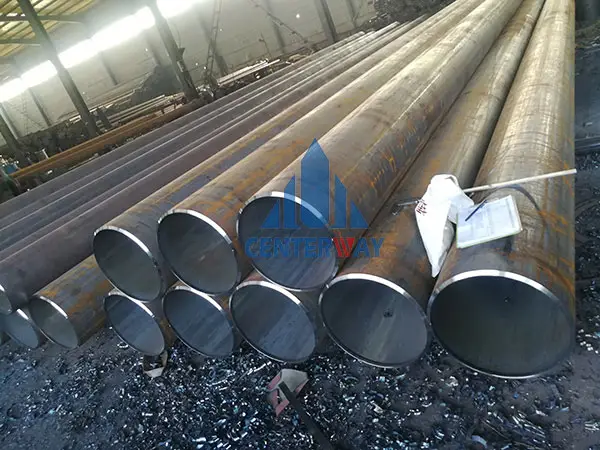
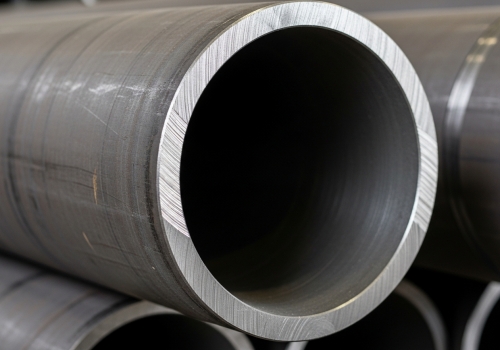
Sourcing the right piping for massive construction projects is stressful. One mistake in specifications can delay the whole timeline. Here is the solution you need. A large diameter seamless steel pipe is typically defined by an outside diameter exceeding 100mm. It is manufactured using hot rolling, thermal expansion, or cold drawing to achieve high strength. These pipes are essential for high-pressure applications where weld integrity cannot be risked.
Choosing the right manufacturer is just as hard as understanding the technical specs. Let’s look at the details so you do not make a mistake.
You need specific sizes, but standard molds often limit your options. This frustration is common when dealing with rigid production lines. Manufacturers use hot rolling or thermal expansion to create these pipes. Thermal expansion is particularly useful for creating non-standard sizes from 325mm to 1220mm quickly. This process lowers costs and increases production efficiency for urgent project needs.
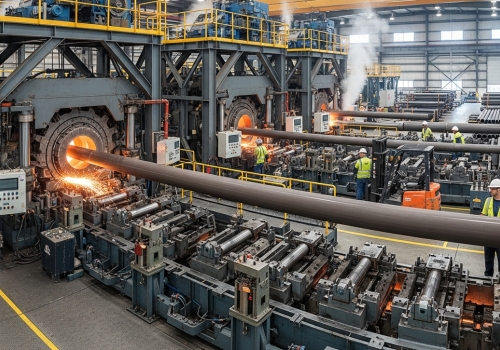
In my experience at Centerway Steel, I see many customers confused about the production methods. Let me break it down. The main production process in China involves hot rolling and thermal expansion. Thermal expansion is a very smart method. It allows us to produce a large diameter seamless steel pipe that does not fit standard national dimensions. We use a skew rolling method or a drawing method to expand the diameter of the pipe. This happens in a short time. It thickens the steel to create non-standard types. The density is slightly lower, but the cost is low and the efficiency is high. This is a major trend in the international market today. If you need a specific size like 325mm up to 1220mm with a heavy wall thickness, thermal expansion is often the best choice. It solves the shortage of specific pipe diameters in the market.
| Feature | Hot Rolling | Thermal Expansion |
|---|---|---|
| Diameter Range | Standard sizes | Flexible (325mm - 1220mm) |
| Cost | Higher for custom molds | Lower |
| Speed | Slower for non-standard | Fast |
| Application | Standard Projects | Urgent, Custom Projects |
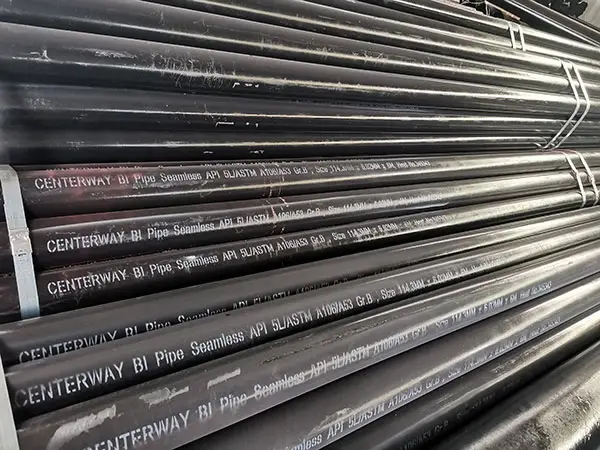
Rust and surface damage during shipping can ruin your budget. Ignoring the delivery state of steel is a primary cause of these unexpected losses. Cold-drawn pipes offer high precision but lack a protective oxide layer, making them prone to rust if not stored in temperature-controlled warehouses. Hot-rolled pipes come with an iron oxide layer, allowing them to be stored in open yards more safely.
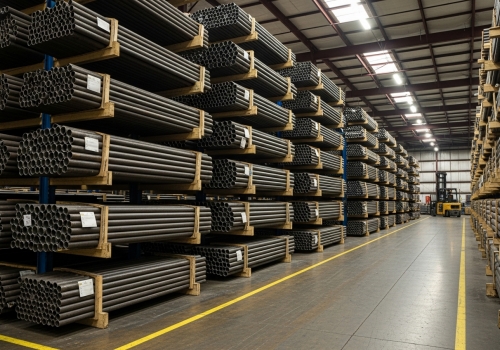
The state in which the steel is delivered affects how you must handle it. If you buy cold-drawn or cold-rolled products, they have high dimensional accuracy. The surface quality is good, and the roughness is low. However, because they are cold-worked, they have high internal stress. More importantly, they do not have an oxide layer on the surface. This means they are very easy to rust. If you are an EPC company, you must keep these pipes in a warehouse. You have to control the humidity and temperature. On the other hand, hot-rolled pipes are delivered after cooling from a high temperature (800 ~ 900 ℃). This is similar to a normalizing treatment. These pipes are covered with a layer of iron oxide. This layer resists corrosion. You can store medium and thick hot-rolled pipes in an open-air yard if you cover them with simple mats. Knowing this difference helps us plan your logistics. At Centerway Steel, we always advise our clients on storage based on the delivery state to prevent damage before installation.
Internal stress in steel can cause sudden cracking under pressure. This invisible danger threatens the safety of your entire pipeline infrastructure. Annealing is a critical heat treatment that eliminates internal defects and stresses left by manufacturing. By refining the steel's structure, we ensure the pipe meets the necessary hardness and ductility requirements for heavy-duty use.
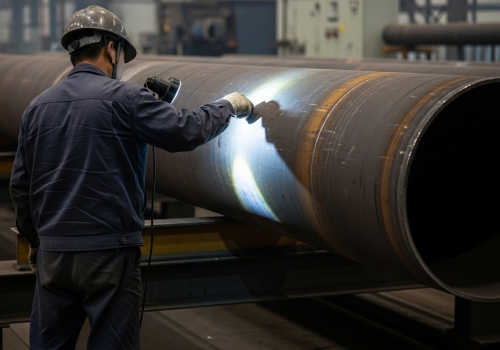
Heat treatment is not just an extra step; it is essential for quality. After the manufacturing process, the steel often has internal issues. These can be uneven structures or high internal stress. If we do not fix this, the pipe might fail under pressure. Annealing is the main method we use. The goal is to eliminate defects and improve the internal organization of the steel. This prepares the material for further processing or final use. For example, alloy structural steel, bearing steel, and heat-resistant stainless steel all require this step. There is also "Controlled Rolling." Many modern steel mills use this. They control the finishing temperature strictly and use forced cooling. This refines the grain of the steel. It makes the mechanical properties much better. It is similar to why non-twist controlled cooling wire rod is better than ordinary wire rod.
| Treatment | Purpose | Benefit for Buyer |
|---|---|---|
| Annealing | Eliminate defects & stress | Prevents cracking, easier to machine |
| Normalizing | Refine grain structure | Uniform strength throughout the pipe |
| Controlled Rolling | Manage cooling speed | Superior mechanical properties without extra cost |
Selecting the right large diameter seamless steel pipe requires understanding manufacturing and storage needs. At Centerway Steel, I ensure you get the right quality for your global projects.