 English
 Español
 Русский
Vision/Value: Pragmatism, Integrity, Passion

Are you struggling with pipe failures under high pressure? Weak welds cause big problems. I will show you how seamless manufacturing fixes this issue completely. The seamless tube extrusion process is a manufacturing method that forms solid steel billets into continuous pipes without welded seams. It involves heating raw material, forcing it through a shaping die, sizing it, and cooling it to create high-strength tubes for demanding projects.
I remember losing a big EPC contract years ago because our old pipes could not handle extreme stress. That failure pushed me to master this production method. Let me walk you through exactly how we make these reliable pipes from start to finish.
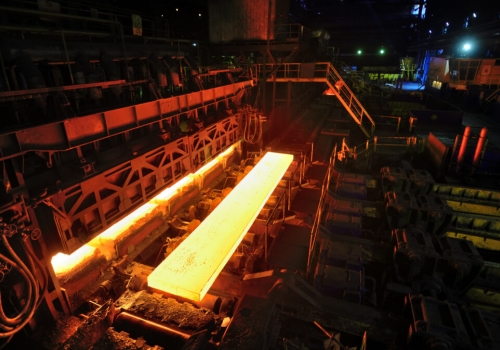
Bad raw materials ruin your entire project. It wastes money and time. Choosing the right steel grade and heating it properly solves this problem from day one. We start by selecting a solid steel round billet based on your exact strength needs. We then heat this billet in a furnace above its recrystallization point but below melting. This makes the metal soft enough to shape without losing its core structure.
At Centerway Steel, I always tell our buyers that extrusion is only as good as the raw steel. We do not just grab any metal. We look at the chemical makeup first. You might need pipes for oil and gas. We use high-carbon or alloy steel for that. You might need simple water pipes. We use basic carbon steel.
Heating is not just about making metal hot. It is a precise science. We will ruin the shape if we heat the billet too much. The metal will crack under pressure if we heat it too little. I learned this the hard way during a winter run in 1999. Our furnace temperature dropped slightly. We had to scrap the whole batch.
| Steel Grade | Target Heating Temperature | Application Focus |
|---|---|---|
| Carbon Steel | 1100°C - 1250°C | Construction, General Fluid |
| Alloy Steel | 1150°C - 1280°C | High-Pressure Oil & Gas |
| Stainless Steel | 1180°C - 1300°C | Corrosive Environments |
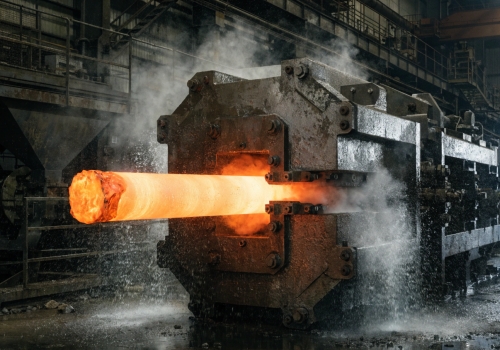
Uneven pipe walls lead to leaks and pressure drops. This ruins pipeline systems. Pushing the hot metal through a precise die ensures perfect thickness every time. We push the heated billet through a custom-designed die using extreme pressure. The metal flows over a piercing rod to create the hollow center. After that, we stretch and flatten the tube in a sizing mill to hit your exact outside diameter and wall thickness.
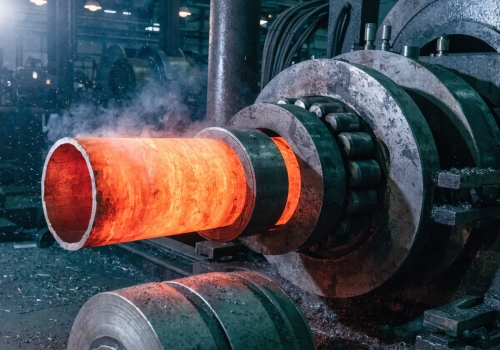
This is where the magic happens. I love watching the heavy press force a solid block of steel into a hollow pipe in seconds. The press applies massive tons of force. The metal has nowhere to go. It must flow through the gap between the die and the piercing mandrel. This gap defines the initial wall thickness.
The pipe is still rough after the first push. You need perfect dimensions for your EPC projects. So, we send the pipe through a reducing mill. The rollers stretch the hot pipe. They squeeze it to the final size.
| Sizing Process | Purpose | Resulting Tolerance |
|---|---|---|
| Piercing | Creates the hollow center | Rough, +/- 10% |
| Elongating | Thins the wall, lengthens pipe | Medium, +/- 5% |
| Sizing Mill | Final outside diameter | Precise, +/- 1% |
Brittle pipes snap under stress. Replacing broken pipes costs thousands of dollars. Proper cooling and heat treatment make the steel tough and flexible enough for any heavy job. After shaping, we cool the seamless tube at a controlled rate to build a strong grain structure. We then use heat treatments like annealing or tempering to relieve internal stress. Finally, we deburr, polish, and apply anti-corrosion coatings to meet your exact job site needs.
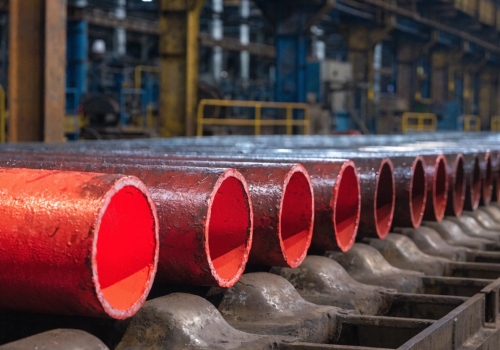
Steel gets very hard but very brittle if you cool it too fast in the open air. It might get too soft if you cool it too slowly. I work with our engineers to match the cooling speed to the specific steel grade. We often use a slow rotating cooling bed. This keeps the pipe perfectly straight while the temperature drops.
Sometimes, just cooling is not enough. The extrusion forces create stress inside the metal walls. We put the pipes back into a special oven to relax that stress.
| Treatment Type | How It Works | Best For |
|---|---|---|
| Annealing | Slow heat and slow cool | Making metal softer to bend |
| Normalizing | Air cooling from high heat | Making grain structure even |
| Tempering | Reheating to lower temp | Adding toughness against impact |
We do not just ship bare metal. We cut the ends smooth. We add varnish or epoxy coatings. I want the pipe to look good. I also want it to fight rust while it sits outside your warehouse.
Hidden cracks in steel pipes lead to disaster. You cannot afford an explosion on site. We use strict testing methods to find every invisible flaw before shipping. The final step is strict quality control. We use ultrasonic testing to check wall thickness and find internal defects. We also use magnetic particle inspection for surface cracks. Finally, we apply high-pressure water inside the pipe to ensure it holds your required working pressure without leaking.
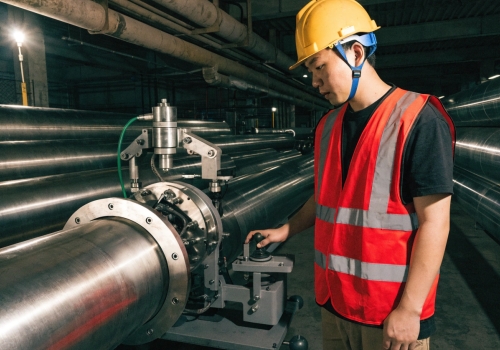
I take inspection very seriously. Years ago, a client found a tiny leak during installation. We replaced it immediately. But it taught me to test every single product. We rely heavily on NDT. This means we check the pipe without breaking it. Ultrasonic sound waves bounce off hidden bubbles inside the steel wall. This tells us if the inside is solid.
This is the ultimate proof. We seal both ends of the pipe. We pump it full of water. We push the pressure way past normal working limits.
| Test Method | Defect Targeted | Industry Standard |
|---|---|---|
| Ultrasonic (UT) | Internal voids, wall thinness | API 5L, ASTM |
| Magnetic Particle | Surface cracks | ASME Boiler Code |
| Hydrostatic | Leaks, burst strength | ISO 3183 |
We keep all test records. When you buy from Centerway Steel, I send you the exact test report for your specific batch. You can hand this report directly to your project owner with total confidence.
The seamless tube extrusion process uses careful heating, precise shaping, controlled cooling, and strict testing. This creates strong, leak-proof pipes ready for your toughest construction and pipeline projects.