 English
 Español
 Русский
Vision/Value: Pragmatism, Integrity, Passion

Do pipe failures cause safety risks in your power projects? High pressure pipeline leaks cost time and money. You need a reliable solution to handle extreme stress. A high pressure seamless pipe is a steel tube designed without a welded seam. Engineers use this pipe widely in power plants, boilers, and petrochemical facilities to ensure safe and stable fluid transportation under extreme temperatures and massive pressure.
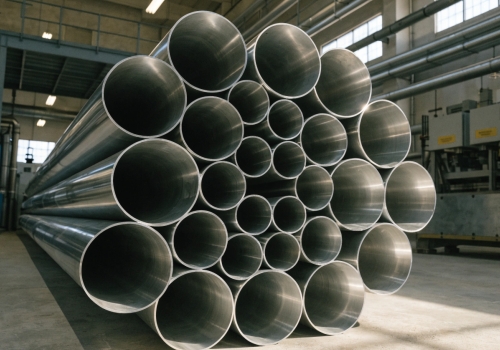
You might wonder how this pipe actually performs under extreme conditions. Let us look at its specific technical traits. If you do not choose the right pipe, your entire project could fail.
Does your current piping lose strength at high temperatures? Heat and pressure destroy weak pipes fast. You must understand what makes a pipe survive these harsh environments. The core characteristics include superior pressure resistance and excellent high-temperature corrosion resistance. Manufacturers use specific alloy steels to maintain geometric accuracy. This guarantees the high pressure seamless pipe will not fail or leak under hundreds of atmospheres of pressure. I work with EPC purchasing managers every day. They always ask me about the true strength of these pipes. A high pressure seamless pipe can withstand hundreds of atmospheres of working pressure. This happens because the pipe lacks a welded seam. The metal structure remains continuous and strong. We focus heavily on high-temperature corrosion resistance. These pipes sit in hot flue gas and hot steam environments all day. Standard pipes oxidize and fail quickly. We use specific alloy steels like chromium-molybdenum steel. Common grades include 20G and 15CrMoG. These materials ensure the pipe does not break down at temperatures above 538 degrees Celsius. We maintain strict geometric accuracy. The outer diameter and wall thickness must stay within exact limits. This stops media leakage and prevents stress points. I remember a client who used bad pipes with poor wall thickness tolerances. Their pipes cracked under extreme pressure. You must prioritize these core characteristics to keep your projects safe. We guarantee these precise tolerances in our own factories.
Are you confused by different global steel standards? Picking the wrong standard leads to project rejections. You need a clear guide to match the right specifications. The common standards for high pressure pipes include the American ASTM system, the European EN system, and the Japanese JIS system. Your choice depends heavily on the operating pressure, the maximum temperature, and the specific fluid inside the pipe.
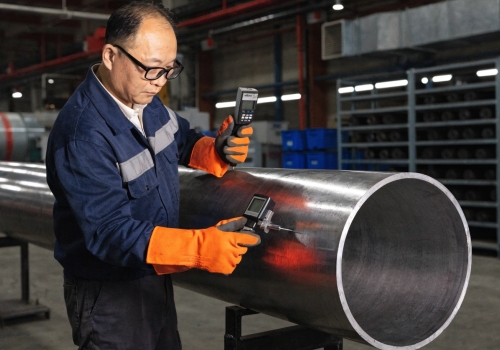
Many engineers struggle with international material standards. I want to make this easy for you. Many buyers use the American standard system. We use ASTM A106 for carbon steel pipes in high-temperature steam lines. We use ASTM A213 for alloy steels in boiler superheaters. We use ASTM A335 for power plant main steam pipelines. The European standard system is also strict. EN 10216-2 covers pressure-bearing seamless steel pipes. EN 10216-5 covers stainless steel seamless pipes for corrosive media. The Japanese standard system uses JIS G3462 for alloy steel boiler pipes and JIS G3458 for carbon steel pipes. We always match the standard to the exact project needs. You must check these standards carefully before you buy. I always help my clients cross-check their blueprints with these exact codes. This stops costly mistakes. I created a simple table to show these common standards clearly. You can use this table to find the right steel grade for your specific temperature and pressure requirements. We always provide the exact certificates for every standard.
| Standard System | Standard Code | Typical Material | Main Application | Max Temperature |
|---|---|---|---|---|
| American (ASTM) | ASTM A106 | Carbon Steel | Steam pipelines | Up to 425℃ |
| American (ASTM) | ASTM A213 | Alloy Steel | Boiler superheaters | Up to 650℃ |
| American (ASTM) | ASTM A335 | Alloy Steel | Main steam pipelines | Over 538℃ |
| European (EN) | EN 10216-2 | Alloy Steel | Pressure pipes | -50℃ to 580℃ |
| Japanese (JIS) | JIS G3462 | Alloy Steel | Heat exchangers | Varies by grade |
Do you worry about weld seams splitting under pressure? Welded pipes often fail in high-stress areas. You need a solid structure to prevent catastrophic pipeline bursts. You should choose seamless pipes because they have a continuous metal structure. They eliminate weld stress problems completely. They provide uniform stress distribution, superior tensile strength, and better corrosion resistance compared to standard welded pipes. The debate between seamless and welded pipes happens constantly in the construction industry. I recommend the high pressure seamless pipe for critical applications. We form this pipe by piercing and rolling a solid tube blank. This process keeps the metal flow structure completely continuous. You eliminate all weld stress problems. A weld seam acts as the weakest point in a normal pipe. Uneven heating during welding lowers the strength of the metal. Seamless pipes do not have this weak point. They offer amazing stress distribution uniformity. The entire pipe body handles high pressure equally. This prevents stress concentration in one spot. We use heat treatment processes like quenching and tempering. This raises the tensile strength to over 600MPa. A high pressure seamless pipe resists grain coarsening at high temperatures. The pipe maintains great thermal stability. The pure composition has fewer impurities. This greatly improves corrosion and wear resistance. Welded pipes simply cannot match this level of safety and durability. You save money long-term because you avoid costly pipe replacements.
Do you struggle to find reliable pipes for harsh industrial environments? Cheap pipes cannot handle power plants. You need proven materials for critical infrastructure. We apply high pressure seamless pipes in energy power generation, petrochemical industries, heavy machinery, and marine construction. They serve as boiler water-cooled walls, high-pressure reactor feed pipes, and heavy-duty hydraulic cylinders.
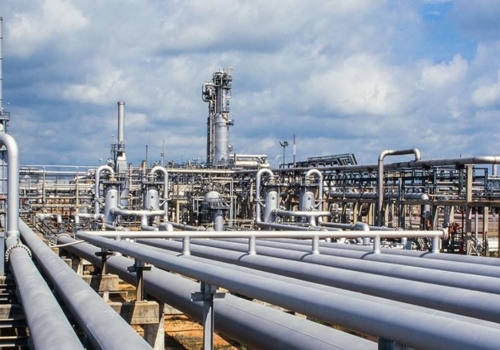
I have seen these pipes work miracles in the field. We supply pipes for the energy and power sectors. Power plants use them for boiler water-cooled walls and main steam pipes. The pressure in these lines often exceeds 30MPa. We supply the petrochemical industry. Refineries use them for wellhead tubing and feed pipes in high-pressure reactors. We export these pipes globally. I recently managed a large EPC project in Turkey. The local power plant needed reliable main steam pipes. We delivered our top-grade seamless pipes. The Turkish engineers praised the perfect geometric accuracy and easy installation. We have deep roots in the African market. We supplied high-temperature corrosion-resistant pipes for an oil refinery expansion in Nigeria. The pipes operate safely in severe hydrogen sulfide environments. The African project managers trust our quality completely. We provide true one-stop pipeline product services. We know how to meet strict international standards. We deliver materials safely to any job site around the world.
High pressure seamless pipes offer unmatched strength and safety for extreme environments. They remain the best choice for your demanding industrial, power generation, and petrochemical pipeline projects.